
Best Deep Plane Facelift Surgeon in Newport Beach: Why Patients Choose Dr. Stephen Fink
A detailed guide to deep plane facelift surgery, surgeon selection, cost, recovery, and the individualized approach Dr. Stephen Fink brings to facial rejuvenation at Newport Faces.
Choosing a facelift surgeon is one of the most consequential decisions you will make for your appearance. In Newport Beach, a market known for world-class cosmetic surgery, the number of options can feel overwhelming. This guide is written from the perspective of Newport Faces to help you understand deep plane facelift surgery, evaluate what separates an exceptional surgeon from the rest, and see why many patients consider Dr. Stephen Fink among the best in the field.
Over the last decade, the term “deep plane facelift” has become one of the most discussed phrases in facial plastic surgery. Patients often arrive at consultations having watched videos, read articles, and compared countless before-and-after photos. The common question is simple: Is the deep plane facelift really better?
According to Dr. Fink, the answer is more nuanced than a simple yes or no. A deep plane facelift is not one operation performed exactly the same way by every surgeon. There are many variations, and the quality of the result depends far more on the patient’s anatomy, the surgeon’s judgment, and the execution of the procedure than on its name alone.
Key Takeaways
Dr. Stephen Fink has more than 30 years focused on facial rejuvenation and facial plastic surgery.
Newport Faces offers personalized care, direct surgeon access, and a discreet Newport Beach setting.
Typical Newport Beach pricing may fall between $40,000 and $80,000 depending on complexity and combined procedures.
Deep plane facelift results can remain visible for ten to fifteen years, although every patient ages differently.
Credentials, accredited facilities, surgical judgment, and before-and-after results should outweigh the lowest price.
Why Patients Choose Dr. Stephen Fink for Deep Plane Facelift Surgery
What sets Dr. Stephen Fink apart is his exclusive focus on facial cosmetic surgery and plastic and reconstructive surgery of the face and neck. He does not perform body procedures. This highly specialized focus allows him to tailor each facelift to the patient’s facial anatomy, aging pattern, and desired outcome rather than using the same surgical formula for everyone.
Here is what defines his practice:
“The goal of modern facial rejuvenation is not to stretch the face. It is to elevate and reposition the tissues superficial to the facial muscles toward where they were years earlier.”
Dr. Stephen FinkAs the face ages, it loses volume and bone support while the soft tissues gradually descend. The cheeks flatten, the jawline becomes less defined, and the neck begins to blend into the lower face. Dr. Fink’s approach is designed to restore these natural relationships without changing the patient’s identity.
What Is a Deep Plane Facelift and How Is It Performed?
A deep plane facelift is a surgical technique that goes beyond the skin to reposition deeper facial structures, including the SMAS layer, facial tissue, and retaining ligaments. Unlike a standard SMAS facelift or mini facelift that primarily tightens the skin and superficial layers, the deep plane approach lifts deeper tissues and underlying muscles as a single unit. This addresses significant aging in the neck and profile by treating the root causes of sagging skin, jowling, and deep nasolabial folds.
Traditional facelift techniques often tighten the SMAS from the side of the face. While this can improve the jawline and lower face, the tissues may have limited mobility unless key retaining ligaments are released.
A deep plane facelift works beneath the SMAS layer and releases the ligaments that tether the facial tissues in place. This allows the deeper facial layers to be mobilized and repositioned together as one unit, helping elevate the cheeks, soften the nasolabial folds, improve the jowls, and restore better facial balance.
At Newport Faces, a deep plane facelift performed in an accredited outpatient surgical facility is done as an outpatient procedure. Accredited facilities must be used for performing deep plane facelift surgeries to ensure the highest safety standards. The surgery is typically done under general anesthesia or deep IV sedation, with a board-certified anesthesiologist present throughout.
Key Steps of the Procedure
Discreet Incisions
Small, well-hidden incisions are placed inside the tragus and behind the ears, following natural creases and the hairline to access deeper layers while minimizing visible scarring.
Ligament Release
The surgeon enters beneath the SMAS, releases key retaining ligaments, and repositions the malar fat pad and deeper structures.
Comprehensive Elevation
The midface, jawline, and neck are addressed as a composite unit to restore natural facial contours and volume relationships.
Three to Five Hours
The procedure typically takes between three and five hours depending on anatomy, complexity, and any combined procedures.
Dr. Fink’s deep plane approach uses innovative techniques refined over decades, emphasizing surgical precision and an understanding of facial structure to deliver results that look refreshed rather than altered.
Not All Deep Plane Facelifts Are the Same
One of the biggest misconceptions about facial rejuvenation is that every deep plane facelift is identical. Surgeons may use different degrees of dissection, lifting directions, fixation methods, neck techniques, and approaches to jawline contouring.
Two procedures may both be called deep plane facelifts while producing very different results. The artistry lies in adapting the operation to each patient’s anatomy rather than following a one-size-fits-all formula.
Some patients need greater midface elevation. Others require more extensive neck contouring. Some benefit from volume restoration, while others primarily need tissue repositioning. The best facelift is not simply a particular type of facelift—it is the operation that properly addresses the individual patient’s aging pattern.
Deep Plane vs. Traditional Facelift: Why Technique and Surgeon Matter
The difference between facelift techniques involves more than how tightly the tissues are lifted. It also involves which anatomical layers are repositioned, which retaining ligaments are released, how the tissues are supported, and the direction in which they are elevated.
Traditional techniques can provide meaningful improvement, but tightening primarily from the lateral face may leave the central cheek and midface less mobile. Fat transfer may help restore volume, but it does not replace proper tissue repositioning when significant descent is present.
Deep plane facelift surgery may provide significant improvement across the midface, lower face, jawline, and neck because it addresses deeper facial structures rather than relying primarily on skin tightening. However, the quality and naturalness of the result still depend on the surgeon’s training, judgment, and technique.
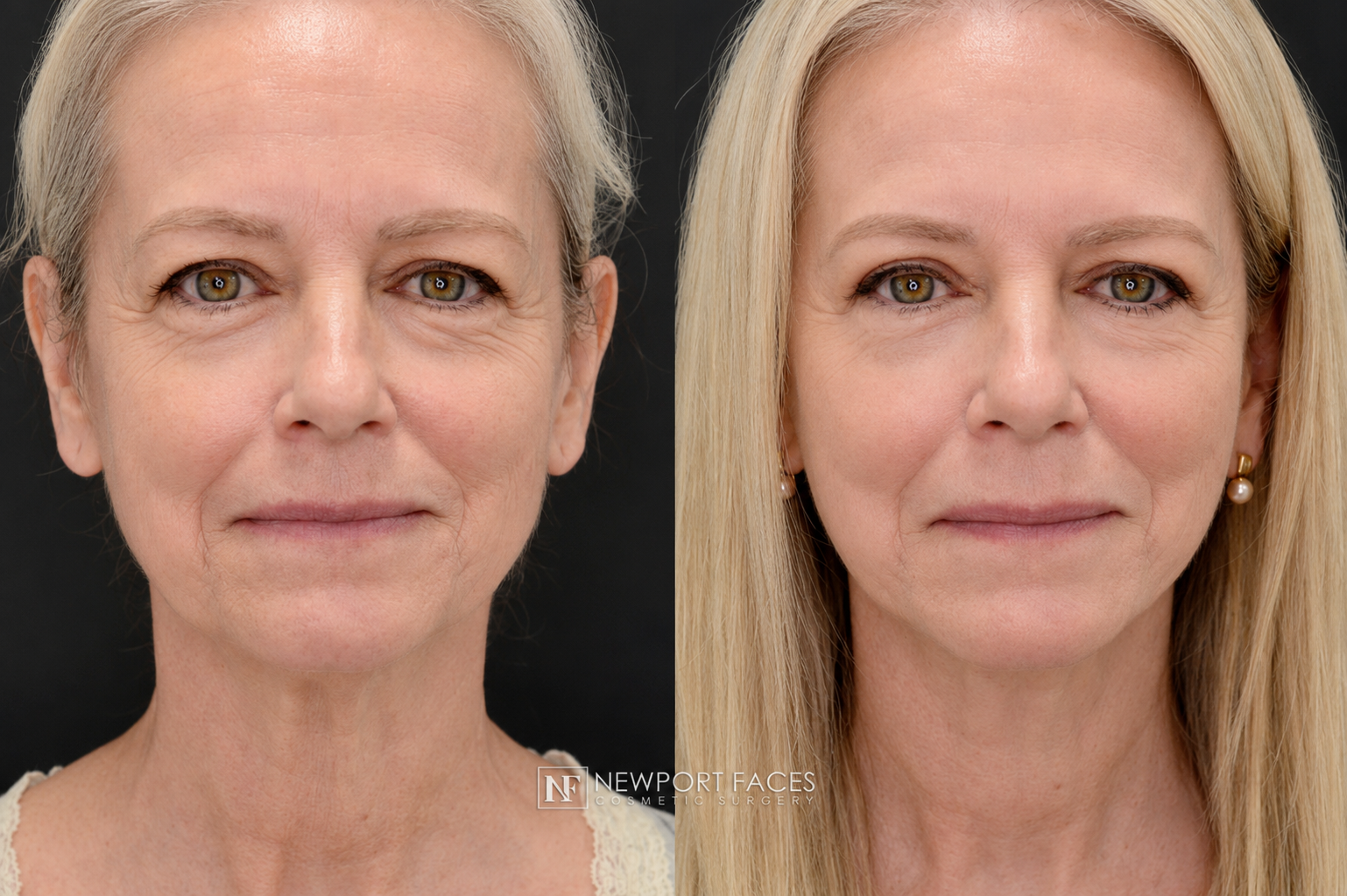
Deep plane facelift surgery requires specific training and experience. Choosing a surgeon requires evaluating surgical credentials and aesthetic philosophy, not just proximity or price. Dr. Fink recommends the best technique after an in-person evaluation, considering your unique facial anatomy, skin quality, and goals rather than applying a one-size-fits-all method. Other techniques may be appropriate for patients with mild aging or those who prefer minimal downtime.
Why Jawline Definition Matters
For many patients, the jawline is one of the facial features most strongly associated with youth and vitality. A defined jawline creates separation between the face and neck, frames the lower face, and contributes significantly to the overall profile.
Repositioning the deeper facial tissues can improve the jowls, but Dr. Fink may incorporate additional techniques when greater jawline support and definition are needed.
The Mastoid Crevasse Technique
One refinement Dr. Fink frequently incorporates is the mastoid crevasse technique. The mastoid region behind the ear provides a stable area for strategic fixation and support of the repositioned tissues.
By using this anatomical region thoughtfully, Dr. Fink can create greater depth below the angle of the jaw and improve the transition between the jawline and neck. Rather than simply pulling the face upward, this technique supports the repositioned tissues in a way that may help preserve jawline definition as the face heals and settles.
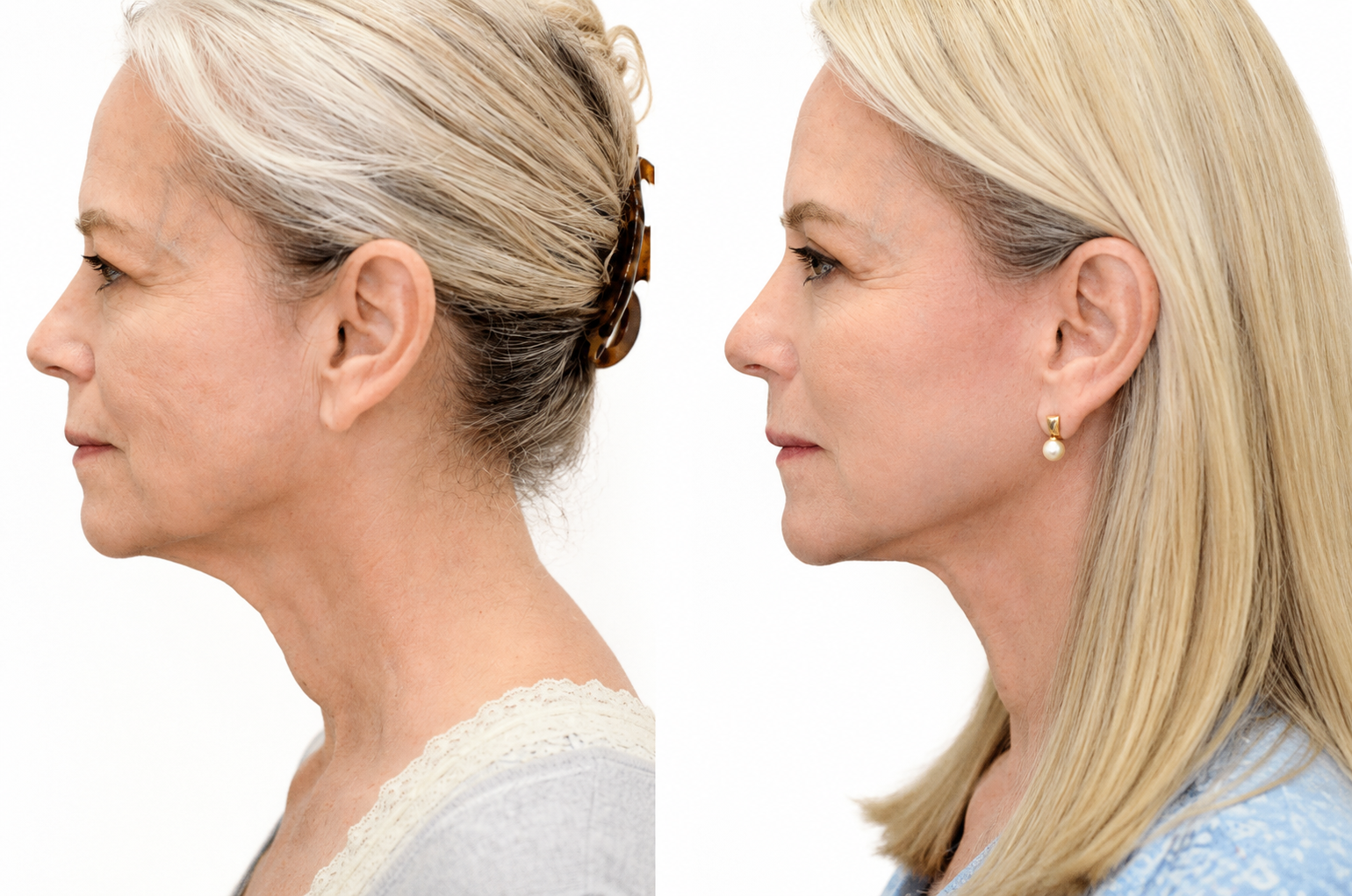
Ideal Candidates and the Deep Plane Facelift Consultation at Newport Faces
Most patients seeking a deep plane facelift are in their 40s to 70s, experiencing jowling, neck banding, wrinkles, and loss of definition along the jawline. A good candidate is in good health, a non-smoker or willing to quit before surgery, and has realistic expectations about what facelift surgery can achieve.
Key Candidacy Factors
During a private consultation at Newport Faces, Dr. Fink conducts an in-depth facial analysis, reviews your medical history, takes photographs, and discusses your goals. He explains all available options—including non-surgical treatments if surgery is not the right fit.
Patients considering a brow lift, eyelid surgery, or procedures to address the upper face can discuss combining treatments at this visit. Consultation fees are transparent, and any applicable fee may be applied toward surgery.
Deep Plane Facelift Cost in Newport Beach: What Patients Should Know
Cost is a major factor for many patients, and Newport Beach is a premium market for plastic surgery. A deep plane facelift can cost between $20,000 and $100,000, with the average cost often falling between $40,000 and $80,000. Costs depend on the surgeon’s expertise, the complexity of the procedure, and any combined treatments.
Main Cost Components
Additional procedures—such as a neck lift, eyelid surgery, fat transfer to restore lost volume, or laser treatments—can increase the total facelift cost. However, combining procedures may reduce total downtime and some duplicated facility fees.
When evaluating deep plane facelift cost, resist the urge to choose based on the lowest price. Board certification by ABPS or ABFPRS reflects rigorous training, and the quality of your results depends heavily on your surgeon’s experience and artistic vision. Compare surgeon training, before-and-after galleries, safety standards, and patient testimonials before making your decision.
Deep Plane Facelift Recovery and Results with Dr. Fink
Deep plane facelift recovery is real but manageable, and Newport Faces provides close follow-up support at every stage. Here is what most patients can expect:
Natural Results Require More Than Aggressive Pulling
One of the hallmarks of exceptional facelift surgery is restraint. Dr. Fink’s objective is not to make a patient look like a different person, but to help the patient look like a younger and more refreshed version of themselves.
When facial tissues are repositioned according to natural anatomical vectors, the face maintains its individual character. The smile remains authentic, the eyes retain their expression, and the result does not appear excessively tight or operated on.
Patients often say that friends and family notice they look refreshed or healthier without immediately recognizing that they had surgery. That subtlety is one of the signs of a successful facelift result.
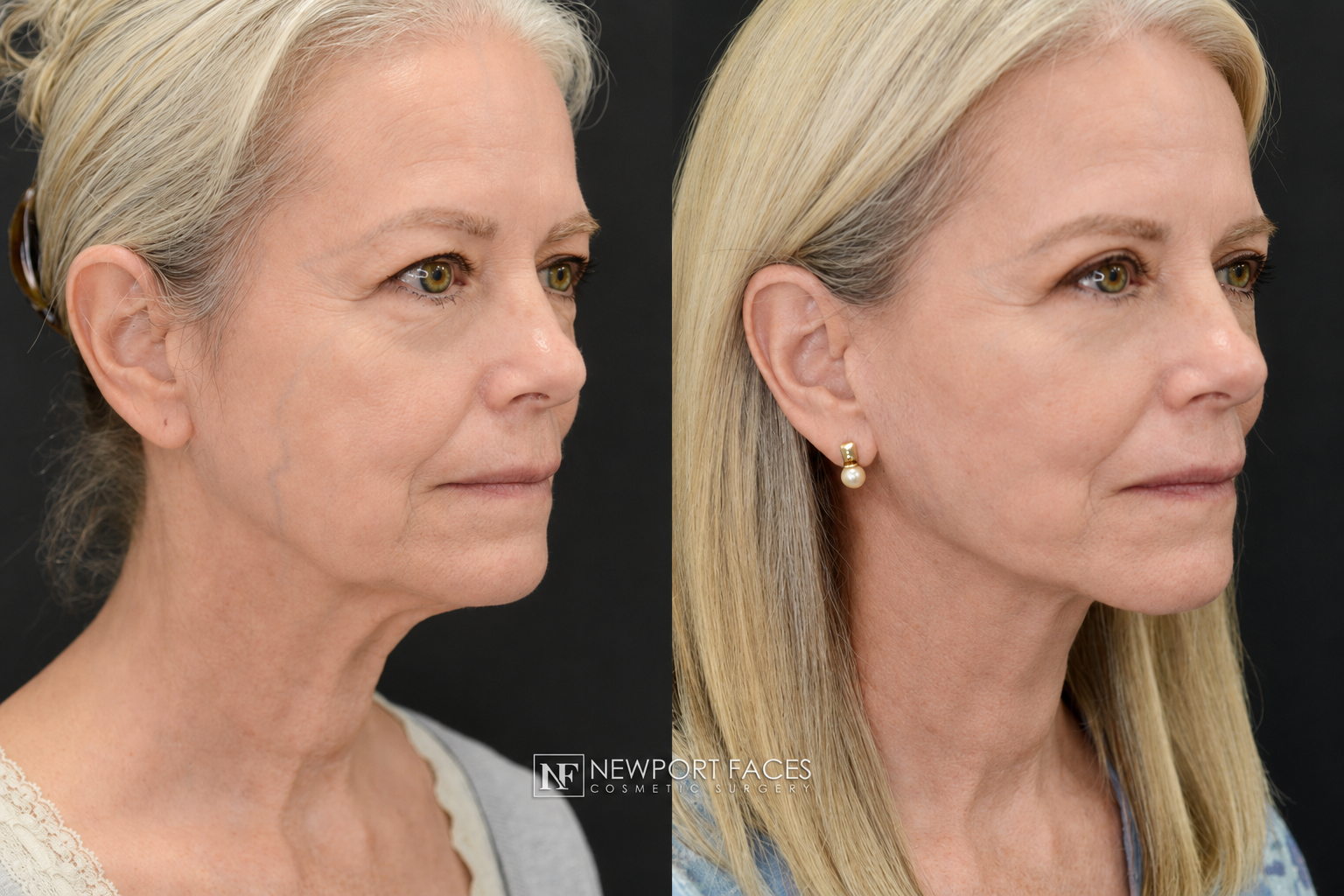
Most patients resume work and social activities gradually as swelling and bruising improve. Final refinement continues over the following months as swelling resolves, the tissues settle, and the incisions mature.
Because deeper facial structures are repositioned and supported, deep plane facelift results may age more gracefully than procedures that rely heavily on skin tightening alone. No facelift stops the natural aging process, but patients may maintain a more youthful facial foundation for many years after surgery.
Longevity varies based on anatomy, genetics, skin quality, sun exposure, lifestyle, and the specific surgical techniques used.
Why Choose Dr. Stephen Fink and Newport Faces for Your Deep Plane Facelift?
Choosing the best deep plane facelift surgeon in Newport Beach comes down to experience, specialization, safety, and honest communication.
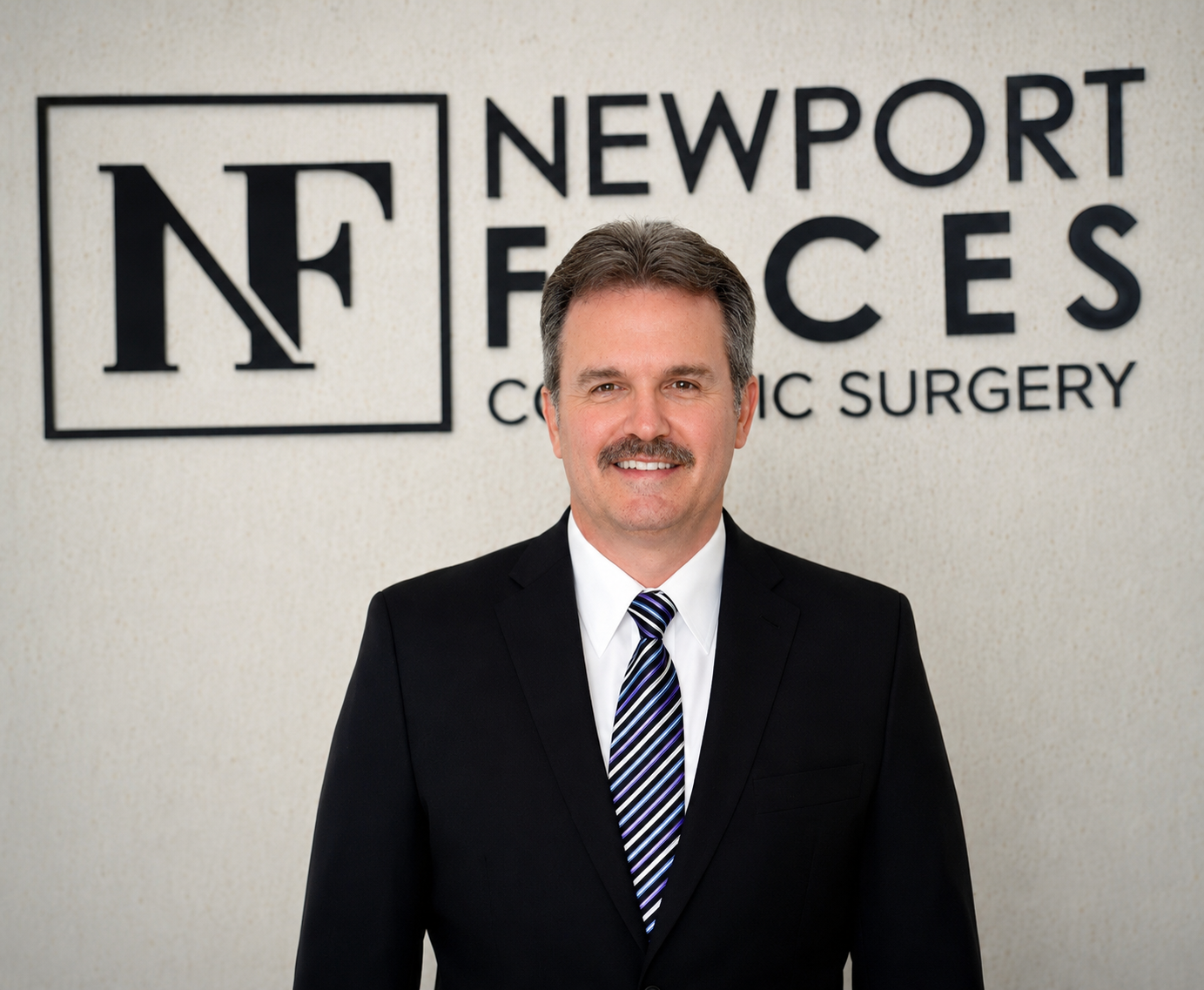
Dr. Fink’s Key Credentials
- Double board certification in Facial Plastic & Reconstructive Surgery and Otolaryngology–Head & Neck Surgery.
- Over three decades of reconstructive and cosmetic surgery focused exclusively on the face and neck.
- A career-long commitment to natural beauty and balanced results while avoiding overtightened or unnatural outcomes.
Newport Faces is located in the heart of Newport Beach, within walking distance of Fashion Island, with a discreet, comfortable office environment convenient for Orange County and out-of-town patients. The practice emphasizes extended consultations, honest discussions about what surgery can and cannot achieve, transparency about risk, and naturally balanced results.
For Dr. Fink, the name of the procedure is only part of the decision. What matters most is how the surgery is performed, how it is adapted to the patient, and whether the jawline, neck, midface, volume, and deeper structural changes are addressed comprehensively.
By combining deep plane principles with individualized refinements such as fat transfer and mastoid crevasse fixation when appropriate, Dr. Fink aims to create stronger jawline definition, improved lower-face support, and balanced results that do not look overly tightened.
The best facelift should not announce itself. It should restore facial harmony, definition, and confidence while allowing the patient to look refreshed rather than operated on.
To learn whether a deep plane facelift is appropriate for your facial anatomy and goals, schedule a private consultation with Dr. Stephen Fink at Newport Faces. Call (949) 566-1032 or request an appointment online.
FAQ: Deep Plane Facelift with Dr. Fink in Newport Beach
How long does a deep plane facelift by Dr. Fink typically last?
Is a deep plane facelift safe for patients in their 60s or 70s?
Can I combine my deep plane facelift with eyelid or brow surgery?
How soon before an event should I schedule my deep plane facelift?
Do I have to stay overnight after my deep plane facelift?

Refreshed, Balanced, and Still Recognizably You
The purpose of thoughtful facial rejuvenation is not to create a different face. It is to restore definition, balance, and confidence while preserving the features and expressions that make each patient unique.
Discover Which Facelift Approach Is Right for Your Face
Meet privately with Dr. Stephen Fink at Newport Faces in Newport Beach to discuss your anatomy, goals, recovery expectations, and the surgical approach most likely to create a balanced, natural-looking result.