
Secondary Facelift in Newport Beach
Address renewed looseness, sagging, volume loss, or concerns from a previous facelift with a customized secondary—or revision—facelift by Dr. Stephen Fink, designed to restore definition without creating a pulled appearance.
What Is a Secondary Facelift?
If you’re observing renewed looseness, sagging, or volume loss years after your initial facelift, a secondary facelift can help restore a more youthful and refreshed appearance.
Whether your previous surgery was performed by Dr. Fink or another surgeon, the effects of aging continue. Many patients begin considering another procedure approximately 8 to 15 years after their original facelift, although timing varies according to anatomy, aging, and the earlier operation.
A secondary facelift is not simply a repeat of the first procedure. Scar tissue, altered tissue planes, previous incision placement, changes in facial volume, and the remaining condition of the skin and SMAS layer must all be carefully evaluated.
Dr. Fink’s goal is to refine the face and neck while avoiding an overly tight or pulled appearance. The plan may include lifting deeper tissues, removing renewed laxity, restoring volume with facial fat transfer, or combining surgery with eyelid surgery when appropriate.
- ✓Renewed cheek, jowl, jawline, or neck laxity
- ✓Facial volume loss that has progressed after a prior facelift
- ✓Residual or unsatisfactory concerns from an earlier procedure
- ✓A focused refinement after adequate healing from previous surgery
Our Patients Before & After Results
Tap any image to see a larger view. All four photographs from the original Secondary Facelift page are preserved below.
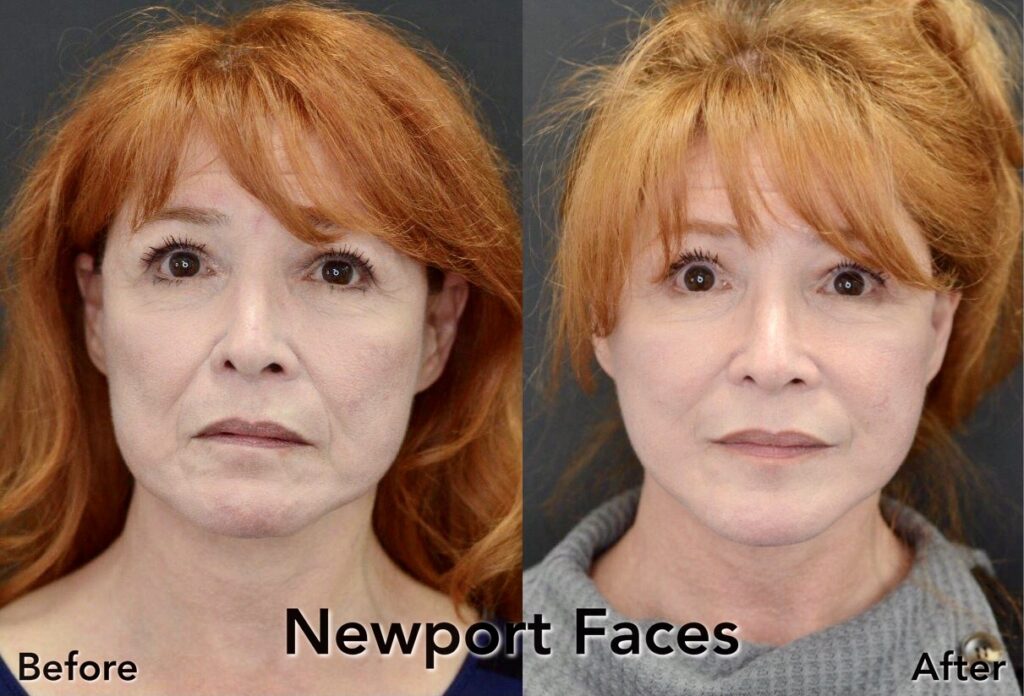 View Result
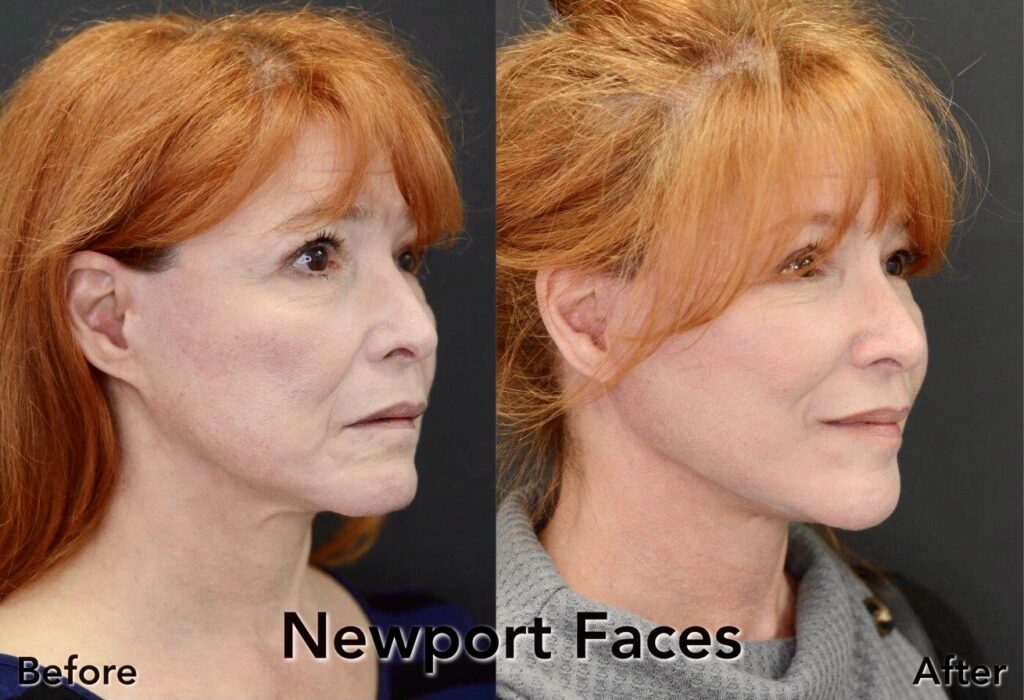 View Result
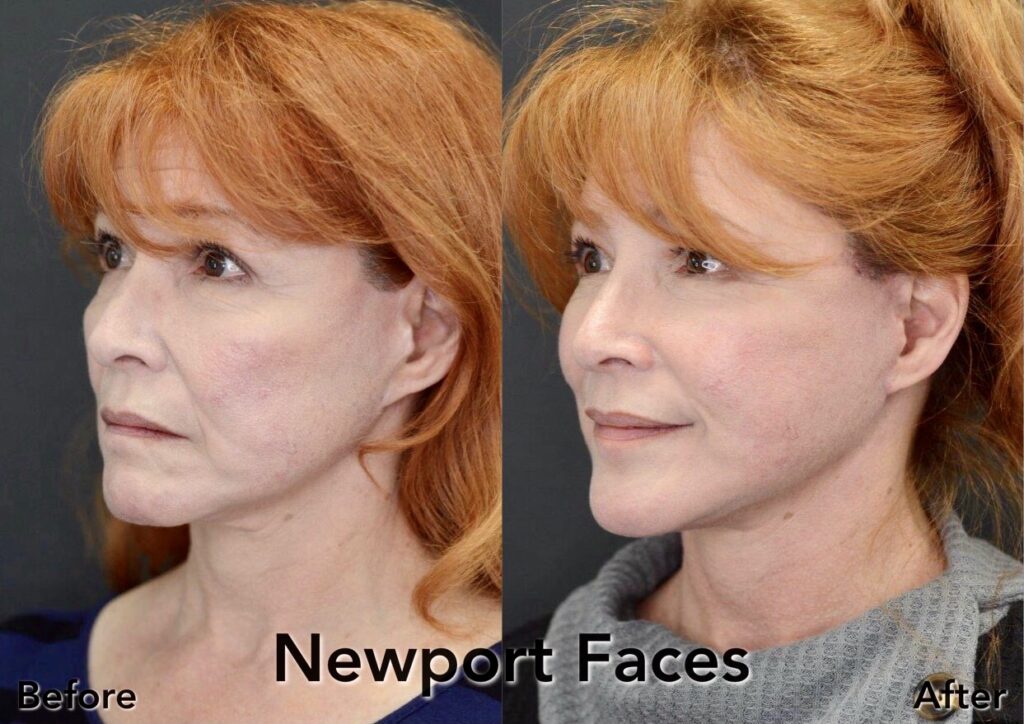 View Result
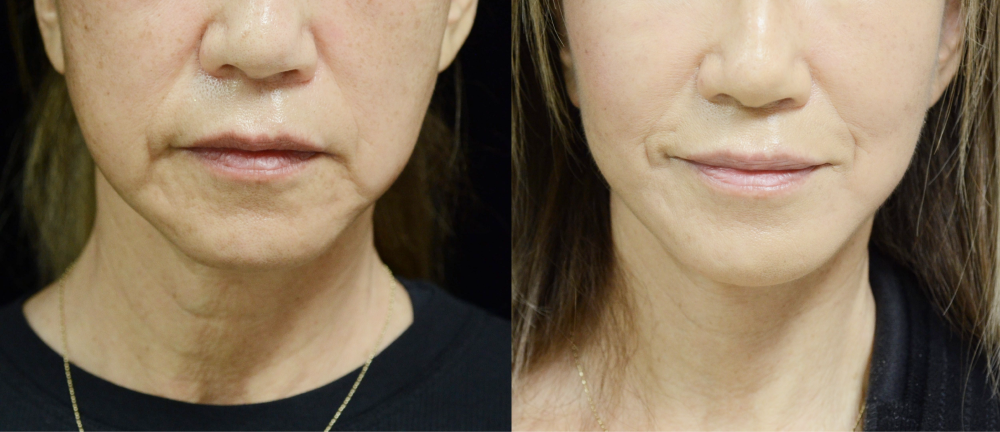 View Result
Individual outcomes vary. Before-and-after photographs are provided for educational purposes and do not guarantee a specific result.
Why a Secondary Facelift Is More Complex
Previous surgery changes the anatomy. Dr. Fink evaluates the current tissue planes, scars, volume, skin quality, and earlier result before selecting a safe and appropriate strategy.
Scar Tissue & Altered Planes
Prior surgery can create scar tissue and change normal tissue planes, making dissection and repositioning more technically demanding.
Different Aging Patterns
Skin, fat compartments, muscle, connective tissue, and bone continue to age after the first facelift, but not always at the same rate.
Previous Surgical Choices
Incisions, tissue removal, SMAS treatment, neck work, and volume changes from the original operation affect what can be safely refined.
What to Expect During Your Secondary Facelift Consultation
During your secondary facelift consultation in Newport Beach, we’ll begin by discussing what led you to consider another procedure. You’ll have space to explain renewed sagging, volume loss, neck concerns, or aspects of a prior result you would like to improve.
Dr. Fink takes a broad educational approach using his Anatomy of Aging discussion to explain how changes in light reflection and facial contours signal aging.
The consultation considers all four major layers—the visible skin, fat compartments, muscles and connective tissue, and bone—rather than focusing only on the skin’s surface.
Dr. Fink will review your previous incisions, current hairline and ear anatomy, scar tissue, tissue mobility, jawline, neck, facial volume, and any available records or photographs from the earlier surgery.
You’ll review relevant case examples and discuss the expected 2.5-to-4-hour procedure, potential complementary treatments, and anesthesia options including local anesthesia with sedation, IV sedation, or general anesthesia.
This education helps align your questions and expectations with a realistic plan for a natural, refreshed result.
Preparing for Your Secondary Facelift
Your preoperative appointment generally lasts about an hour and takes place approximately two weeks before surgery.
During this appointment, we review the procedure again, discuss specific risks, complete consent forms, conduct a physical examination, and address medical conditions and medications such as diabetes or blood-pressure treatment. Lab work may be ordered when necessary.
We take photographs, prescribe medications, finalize payment, and provide written postoperative instructions so you are prepared before the day of surgery.
On the day of surgery, you’ll bring the prescribed medications for administration during check-in. As they take effect, Dr. Fink reviews the plan again, marks the treatment areas, and may supplement oral sedation with an intramuscular injection for comfort during local numbing.
When local anesthesia is selected, patients are generally able to go home promptly after surgery while fully awake. Other anesthesia plans require the appropriate recovery and transportation arrangements.
How Secondary Facelift Surgery Is Performed
Secondary facelift surgery generally lasts approximately 2.5 to 4 hours, depending on the amount of scar tissue, the earlier surgical changes, and the procedures included.
Numbing, IV sedation, or general anesthesia follows the agreed surgical plan.
Dr. Fink carefully evaluates scar tissue and the anatomy created by the prior surgery.
The SMAS and selected deeper structures are tightened, repositioned, or sculpted.
Skin is redraped without excessive tension and incisions are carefully closed.
Dr. Fink may begin with fat grafting for facial rejuvenation or selected neck contouring when those additions are part of the surgical plan.
Incisions typically follow the temple hairline, trace natural ear creases, and extend along the hairline. Existing incision placement and scar tissue may influence the exact approach.
Dr. Fink assesses the current anatomy and addresses renewed sagging skin, jowls, jawline changes, or neck laxity by tightening the SMAS layer or refining deeper structures.
For patients seeking correction of an unsatisfactory earlier result, the operation focuses on specific residual concerns or irregularities. For a secondary tuck or refinement, surgery is generally considered only after adequate healing from the previous procedure.
The objective is a precise result tailored to your anatomy and goals—not simply tighter skin.
Facial Fat Transfer
Fat grafting may be added when volume loss is contributing to hollowing or diminished contours.
Neck & Jawline Refinement
Selected neck contouring may be incorporated when renewed laxity or localized fullness affects the result.
Feature Procedures
Eyelid surgery, brow treatment, or a chin implant may be considered when those features contribute to facial balance.
Recovery After Secondary Facelift Surgery
Recovery focuses on allowing the incisions and deeper tissues to heal without excessive tension. Sutures are generally removed during the first week, although activity restrictions continue for approximately two to three weeks while the tissues strengthen.
Dr. Fink will advise you to avoid lifting anything over 10–15 pounds and avoid activities that significantly elevate your heart rate, such as hills, stairs, or biking, to reduce the risk of bleeding or hematoma.
Beginning approximately two weeks before surgery, selected blood-thinning medications and supplements are stopped according to medical instructions.
After surgery, icing and other physician-directed measures may be used to reduce bruising. Bruising can last approximately one to three weeks, while swelling often improves substantially during the first one to two weeks.
Many patients feel presentable in public within approximately two weeks. About 80% of the result may be visible within one to three months, while residual swelling and final definition can continue improving for longer.
Wound-Care Visit
We teach twice-daily incision cleaning and ointment application and assess the early recovery.
Selected Suture Removal
Some sutures may be removed when appropriate, and the incisions are evaluated.
Additional Incision Sutures
Remaining sutures are removed according to the healing progress.
Increasingly Presentable
Bruising and swelling are usually much improved, although strenuous activity remains restricted.
Photography and Progress Review
Healing is assessed and postoperative photographs may be taken.
Long-Term Follow-Up
Optional visits may be scheduled at three, six, or twelve months according to your needs.
Achieving Natural Secondary Facelift Results
Dr. Fink tailors the secondary facelift to your unique features, including your preferences for cheek, jawline, and neck contour, so the result feels authentic and refreshed.
Recovery is a partnership. Your commitment to avoiding direct sun exposure and following postoperative instructions, combined with careful SMAS tightening and tissue positioning, supports incision healing and the final contour.
To maintain your result as aging continues, Dr. Fink may recommend nonsurgical options such as dermal fillers for selected volume loss, Botox and neurotoxins for expression lines, or laser resurfacing and other skin treatments for surface quality.
Who May Be a Candidate for a Secondary Facelift?
You may be a candidate when sagging cheeks, jowls, jawline changes, neck looseness, or volume loss have returned after an earlier facelift.
Many patients are approximately 8 to 15 years removed from their original procedure, but the calendar alone does not determine candidacy. The condition of your tissues, health, goals, and previous surgery are more important.
Revision surgery may also be considered for selected patients with residual irregularities or concerns from an earlier result, provided enough healing time has passed and the requested improvement is realistic.
Dr. Fink assesses medical history, smoking or nicotine use, blood pressure, diabetes, weight stability, medications, prior healing, and expectations before recommending surgery.
Secondary Facelift FAQs
Will my face look tight and unnatural after a secondary facelift?
How long will my secondary facelift results last?
When can I return to a somewhat normal routine?
What will I look like during recovery?
Who is not a good candidate for a secondary facelift?
Will Newport Faces keep in contact with me after surgery?
What anesthesia options are available?
Who is an ideal candidate for a secondary facelift?
Can Dr. Fink revise a facelift performed by another surgeon?
Can a secondary facelift be combined with other procedures?
Does Newport Faces offer financing?
Secondary Facelift Newport Beach: Key Takeaways
A secondary or revision facelift can address renewed sagging, jowls, jawline changes, neck looseness, volume loss, or selected concerns from an earlier operation. Dr. Stephen Fink personalizes the incision plan, scar-tissue dissection, SMAS refinement, volume restoration, anesthesia, recovery, and follow-up care at Newport Faces Cosmetic Surgery in Newport Beach.