
Blepharoplasty in Newport Beach
Refresh drooping upper eyelids, under-eye bags, puffiness, and a persistently tired appearance with personalized upper, lower, or combined eyelid surgery by Dr. Stephen Fink.
A Naturally Rested, Alert Appearance
If drooping upper lids, puffy under-eye bags, or a perpetually tired appearance make you look older than you feel, blepharoplasty—also called eyelid surgery or an eye lift—can restore a more refreshed appearance.
Upper blepharoplasty addresses sagging or hooded upper-eyelid skin that can make the eyes appear smaller and may interfere with peripheral vision in selected patients.
Lower blepharoplasty treats under-eye puffiness, bags, selected fine wrinkles, and an uneven eyelid-to-cheek transition by carefully removing or repositioning fat and refining excess skin when needed.
Combined upper and lower blepharoplasty rejuvenates the entire eye area and may be performed with a facelift when aging extends into the cheeks and midface.
Dr. Stephen Fink places incisions within the natural upper-eyelid crease, just beneath the lower lashes, or inside the lower eyelid according to the procedure. The goal is to preserve your eye shape, expression, and identity—not create an artificial or overdone look.
- ✓Hooded or heavy upper eyelids
- ✓Under-eye bags, puffiness, or prominent fat bulges
- ✓A tired or aged appearance around the eyes
- ✓Uneven transition between the lower eyelid and cheek
Our Patients Before & After Results
All four photographs from the original Eyelid Surgery page are preserved below without cropping. Tap any image to open a larger view.
 View Result
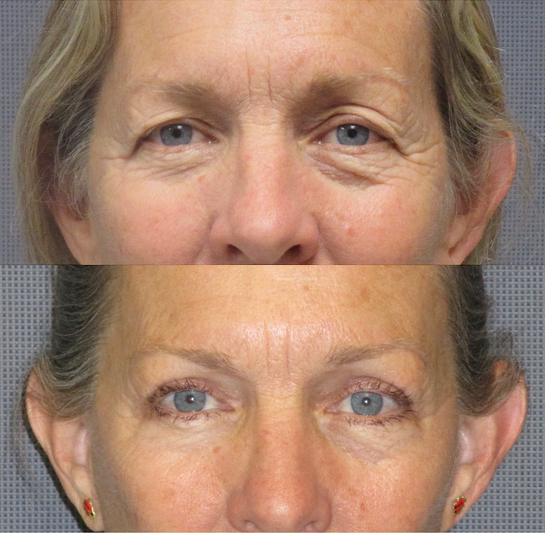 View Result
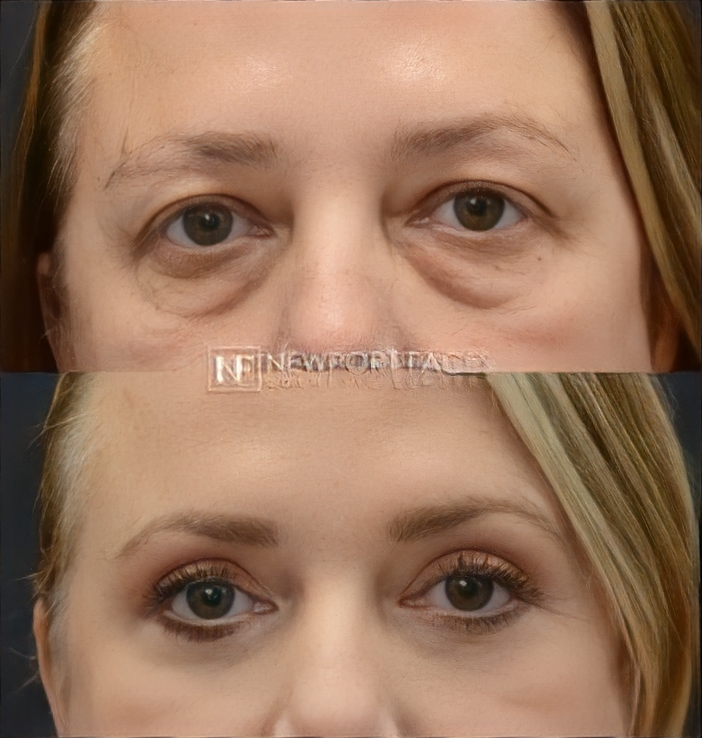 View Result
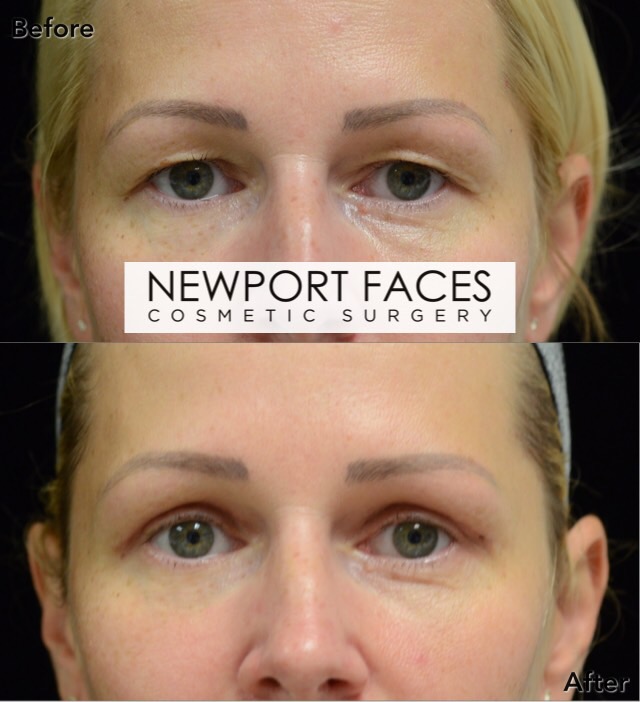 View Result
Individual outcomes vary. Before-and-after photographs are provided for educational purposes and do not guarantee a specific result.
Upper, Lower & Combined Blepharoplasty
The correct approach depends on where aging is occurring, the condition of the skin and fat, your eye shape, brow position, midface anatomy, and desired result.
Upper Blepharoplasty
Removes carefully measured excess upper-eyelid skin and selected fat while preserving eye closure, natural crease position, and your individual expression.
Lower Blepharoplasty
Addresses under-eye bags and puffiness through an external incision below the lashes or an internal approach, with fat removal, repositioning, or grafting when appropriate.
Combined Surgery
Treats both upper and lower eyelids during one operation to create a coordinated rejuvenation of the complete eye area.
What to Expect During Your Blepharoplasty Consultation
During your consultation, Dr. Fink evaluates the upper and lower eyelids separately and as part of the entire face.
For the upper eyelids, you’ll discuss hooding, heaviness, reduced visible eyelid space, vision concerns, asymmetry, brow position, and the amount of skin and fat contributing to the appearance.
For the lower eyelids, the evaluation focuses on under-eye bags, puffiness, skin laxity, shadows, fat bulges, cheek volume, and the transition from the eyelid into the midface.
Dr. Fink’s Anatomy of Aging discussion explains how skin, fat compartments, muscles, and bone all influence the aging eye area. This helps determine whether eyelid surgery alone—or a combination with a brow lift, fat transfer, chemical peel, or facelift—best addresses your concerns.
You’ll review incision placement, relevant before-and-after cases, procedure length, and anesthesia options. Upper surgery generally takes 30–45 minutes, lower surgery 45–60 minutes, and combined surgery approximately 1.5–2 hours.
The purpose of the consultation is to educate you, understand your goals, and create a plan that preserves your eye shape and natural expression.
Preparing for Eyelid Surgery
Your preoperative appointment generally lasts about one hour and takes place approximately two weeks before blepharoplasty.
We’ll review the procedure again, discuss specific risks, complete consent forms, conduct a physical examination, and review medical conditions and medications such as diabetes or blood-pressure treatment. Lab work may be ordered when necessary.
Photographs are taken, medications are prescribed, payment is finalized, and written postoperative instructions are provided so you are prepared before surgery day.
On the day of surgery, you’ll bring your prescribed medications for administration during check-in. As they take effect, Dr. Fink reviews the plan, marks the treatment areas, and may supplement oral sedation with an intramuscular medication for comfort during numbing.
When local anesthesia is used, you remain awake and can generally go home promptly after surgery with the appropriate adult escort.
How Blepharoplasty Is Performed
Every eyelid procedure is customized to the patient’s anatomy, eye shape, skin, fat distribution, facial proportions, and desired level of correction.
Natural creases, skin excess, and treatment areas are carefully measured.
Access is placed in the upper crease, below the lashes, or inside the lower eyelid.
Skin and fat are conservatively removed, repositioned, or supplemented.
Precise suturing supports fine scars and preserves eyelid shape.
Upper blepharoplasty: Dr. Fink marks the natural eyelid crease with the eyes closed to determine the amount of skin that can be safely removed while preserving proper eye closure. Through the crease incision, selected skin and fat are refined and the incision is carefully closed.
Lower blepharoplasty: An incision may be placed just below the lash line when skin removal is needed or inside the eyelid for selected patients. Fat is removed or repositioned to soften bags and improve the eyelid-to-cheek transition. Fat grafting may be added when volume support is beneficial.
Combined upper and lower blepharoplasty: The techniques are coordinated during an approximately 1.5–2-hour operation to rejuvenate the complete eye area while maintaining balance between the upper lids, lower lids, brows, and cheeks.
Dr. Fink avoids excessive skin or fat removal that could create difficulty closing the eyes, a hollowed appearance, or an altered expression.
Upper-Eyelid Crease
The upper incision is positioned within the natural crease, helping the healed line blend with normal eyelid anatomy.
Lower-Lid Access
The lower eyelid may be approached beneath the lashes or from inside the eyelid according to skin excess and fat management needs.
Fat Preservation
Fat may be removed, repositioned, or supplemented to improve bags while avoiding an overly hollow or sunken appearance.
Recovery After Blepharoplasty
Recovery focuses on reducing swelling, protecting the eyes, and allowing the delicate incisions to heal without unnecessary tension.
External sutures are generally removed after approximately five to seven days. Internal lower-eyelid incisions dissolve naturally when that approach is used.
Bruising and swelling typically improve substantially within one to two weeks. Lower-eyelid surgery and fat grafting may create more swelling than upper-eyelid surgery alone.
Patients are generally instructed to avoid rubbing the eyes, heavy lifting, and strenuous activity for approximately two weeks. Combined upper and lower surgery may require restrictions for two to three weeks.
Many patients feel socially presentable within one to two weeks. Approximately 80% of the result may be visible within one to two months, with continued refinement over approximately three to six months.
Wound-Care Visit
We review incision care, ointment, icing, comfort, vision-related precautions, and early healing.
Early Check-In
Swelling, bruising, eye comfort, and recovery progress are evaluated when needed.
Suture Removal
External upper- and lower-eyelid sutures are generally removed according to healing.
Increasingly Presentable
Bruising and swelling are usually much improved, though activity restrictions continue.
Photography and Results Review
Progress photographs may be taken and healing is reviewed.
Continued Refinement
Residual swelling resolves and the scars and contours continue maturing.
Achieving Natural Blepharoplasty Results
For upper blepharoplasty, Dr. Fink removes only the amount of skin and fat needed to open the eyes while preserving the natural crease, eye shape, and expression.
For lower blepharoplasty, fat removal and repositioning are balanced carefully to improve bags without creating a hollow or sunken appearance. Skin and muscle refinement are selected according to the eyelid and midface anatomy.
For combined surgery, the upper and lower eyelids are planned together so the complete eye area appears harmonious rather than surgically altered.
Sun protection and postoperative care help support fine scars. As aging continues, maintenance may include Botox and neurotoxins, dermal fillers, or skin treatments such as chemical peels when appropriate.
Who May Be a Candidate for Blepharoplasty?
Upper blepharoplasty may be appropriate for adults with hooded or sagging upper-eyelid skin, reduced visible eyelid space, a heavy appearance, or selected vision concerns.
Lower blepharoplasty may be appropriate for adults with persistent under-eye bags, puffiness, prominent fat bulges, excess skin, or an uneven eyelid-to-cheek transition.
Combined surgery may be recommended when both the upper and lower eyelids contribute to an aged or tired appearance.
Dr. Fink reviews your health, medications, nicotine use, eye history, dryness, previous eye procedures, brow position, skin quality, fat distribution, facial aging, and expectations before recommending surgery.
Blepharoplasty FAQs
Will my eyes look unnatural or overdone after blepharoplasty?
How long will blepharoplasty results last?
When can I return to a somewhat normal routine?
What will I look like during recovery?
Who is not a good candidate for blepharoplasty?
Will Newport Faces keep in contact with me after surgery?
What anesthesia options are available?
Who is an ideal candidate for upper blepharoplasty?
Who is an ideal candidate for lower blepharoplasty?
Can blepharoplasty be combined with other procedures?
Does Newport Faces offer financing?
Blepharoplasty Newport Beach: Key Takeaways
Upper, lower, or combined blepharoplasty can address hooded eyelids, under-eye bags, puffiness, selected excess skin, and an aged or tired appearance. Dr. Stephen Fink personalizes skin removal, fat management, incision placement, anesthesia, recovery, and follow-up care at Newport Faces Cosmetic Surgery in Newport Beach.