
Under-Eye Bags or Hollow Eyes? How to Tell the Difference
Under-eye bags and hollow eyes both create a tired look, but they often need different treatments. Here’s how Dr. Stephen Fink evaluates them in Newport Beach.
The under-eye area is one of the first places people notice aging. Some see puffy bags. Others see a hollow, shadowed trough. Many have a combination.
Treating bags as if they were hollows—or the reverse—can make the area look worse. This guide explains the difference and the options Dr. Fink considers at Newport Faces.
Upper lid and brow issues are covered in our hooded eyes guide. Volume loss elsewhere in the face is discussed in facial volume loss after weight loss.
Key Takeaways
Bags are usually fat that has become more visible. Hollows are volume loss or a deep tear trough.
Filling a bag or removing fat from a hollow can create an unnatural contour.
Surgery can remove or reposition fat and tighten skin when bags are the main issue.
Careful filler can improve true hollows in selected patients.
Many Newport Beach patients need a plan that addresses both the lid and surrounding volume.
How to Tell Under-Eye Bags from Hollow Eyes
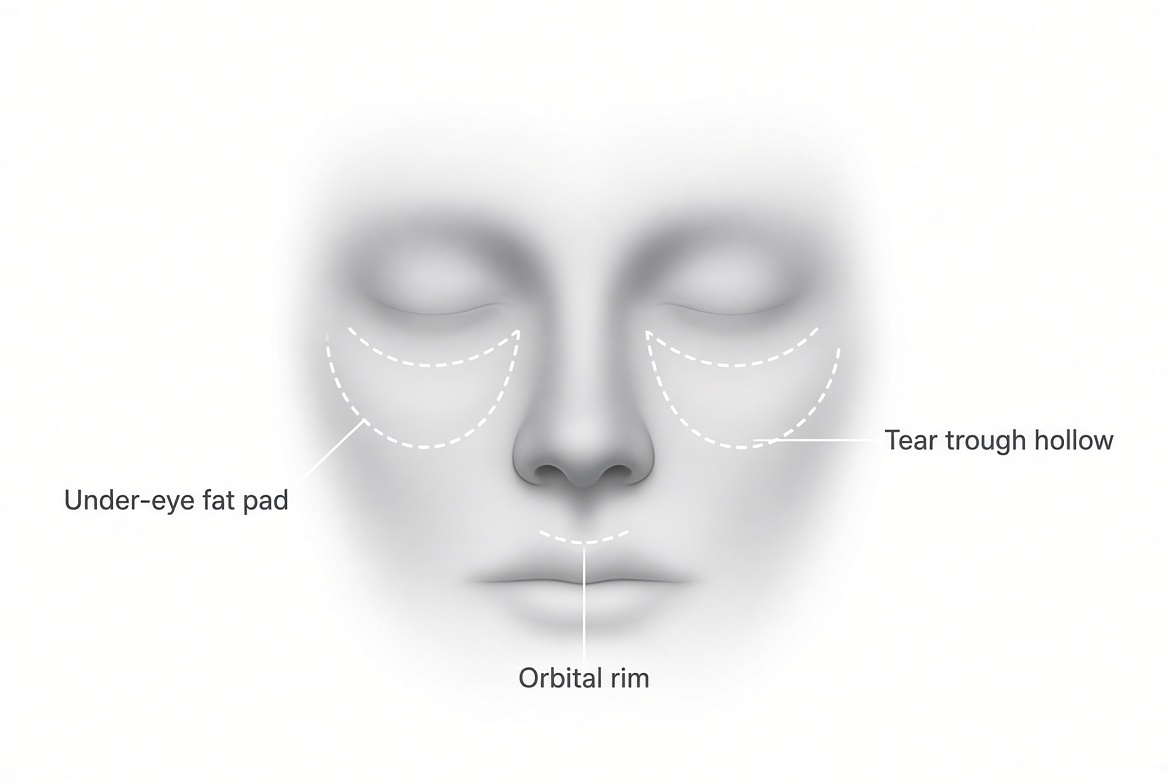
Under-eye bags appear as a bulge or puffiness, often worse in the morning or with fluid retention. They are typically caused by orbital fat that has become more prominent. Hollow eyes show a sunken or shadowed trough between the lower lid and the cheek, often from volume loss or a naturally deep tear trough.
Some patients have both: a bag above and a hollow below. Treating only one can exaggerate the other.
How Under-Eye Bags Are Treated
Lower blepharoplasty can remove or reposition the fat that creates bags and, when needed, tighten excess skin. The goal is a smoother transition from lid to cheek without a hollowed or operated look. Some patients also benefit from skin resurfacing—see CO₂ laser with eyelid surgery.
How Hollow Eyes Are Treated
True hollows and deep tear troughs are often improved with carefully placed filler or, in surgical plans, fat transfer. Removing fat from a hollow area can deepen the shadow. That is why accurate diagnosis matters before any treatment.
Who Is a Good Candidate?
Candidates are generally healthy, bothered by a tired under-eye appearance, and open to either surgical or non-surgical options depending on anatomy. Dr. Fink examines the lid, the cheek junction, and overall facial volume during consultation.
Recovery After Lower Eyelid Treatment
After lower blepharoplasty, swelling and bruising are common for one to two weeks. Most patients feel comfortable in social settings within about two weeks. Filler treatments have minimal downtime. Final results settle as swelling resolves.
FAQ
Can eye cream fix under-eye bags?
Is filler safe under the eyes?
Will lower blepharoplasty leave a visible scar?
Can I treat upper and lower lids together?

A Fresher Under-Eye Area Without Looking Done
The right under-eye plan softens bags or hollows while keeping the eye area natural and expressive.
Find Out Whether You Have Bags, Hollows, or Both
Meet with Dr. Stephen Fink at Newport Faces to evaluate your under-eye anatomy and choose the approach that fits.